Beware enforced merriment

I hate this time of year, particularly the time of year between Christmas and New Year. It seems to be a fallow period, where nobody is expected to do much of anything. Either that, or we’re encouraged to party, lest the incoming year be worse than the last.

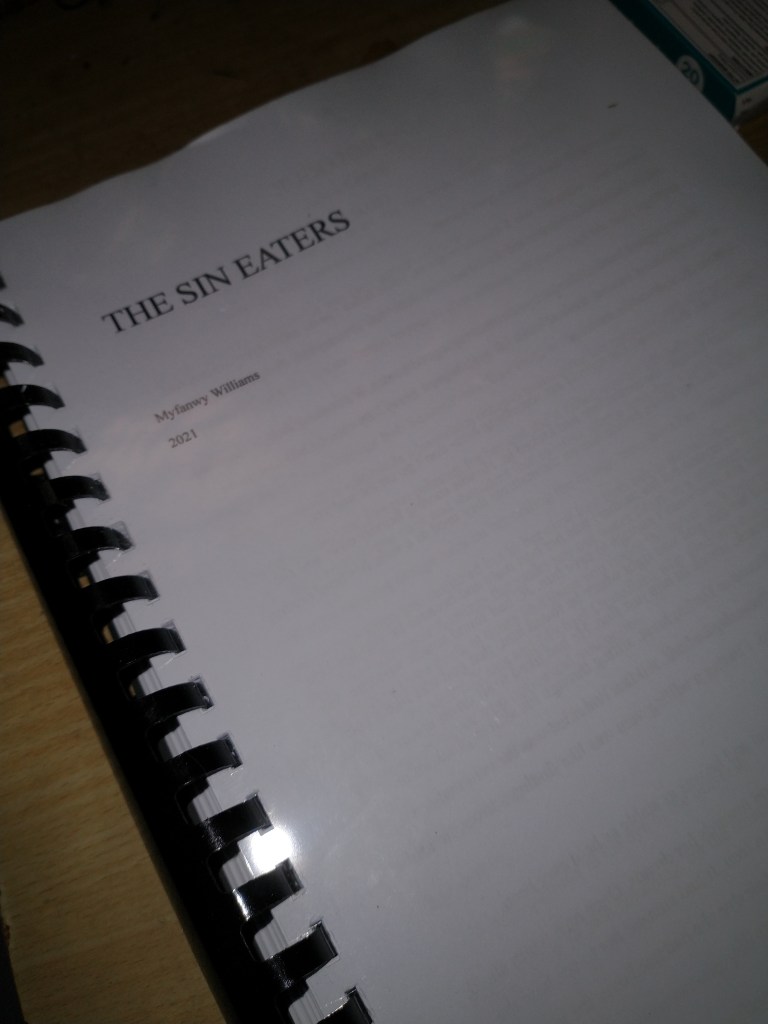
I made the mistake of taking time off. A non-writing writer is a recipe for madness. Hopefully, I am beginning to emerge from such madness. Before Christmas, I finished the 3rd draft of my novel. I decided to take a week off to let the novel rest (kind of like letting bread rise overnight), but I found myself cast adrift without a project to anchor me.

So thank goodness it is now the 2nd January and I can walk away from the week of enforced idleness and the pretense of merriment. This week off has made me think about how important creative life is to our souls. I have certainly sacrificed for my art, but in many ways it is not a sacrifice at all.

This morning I found myself spreading half my toast with vegemite and the other half with jam. Don’t try it, it’s not a good combination. But over the past six months I have only been working in paid work for 2 days a week, so of course I am broke. I worked 7 days a week, 5 days writing and 2 days in paid employment. While not having enough money to buy jam, or pay for bus fare, I don’t think I’ve ever been as fulfilled.

Don’t get me wrong, sometimes I would happily return to an age where a wealthy benefactor paid writers good money to compose sycophantic plays or too long poems in their name. It is difficult living in an age (and country) where the arts gets little funding, and the choice is often one between financial comfort and artistic expression. Hopefully, I will find a balance between the two one day.

But I guess my message here is, don’t take time off from your passion/obsession/project/opus/campaign just because people tell you that you should rest over the holidays. Of course, recharge if you desire it, but don’t rest for the sake of resting. If you are a mad obsessive like me, work is rest and rest is work. For mad souls like me, we need our projects in the same way that we need water.

Things that writers do to write better

1. Accuracy and realism

So, I am trying to learn the guitar. Not because I want to learn the guitar that badly, but one of my characters plays the guitar. What does rock n roll sound like in prose?

Honestly, I don’t like playing the guitar, the strings hurt my fingers and I keep trying to hold the guitar neck like a violin fingerboard. The frets are meant to make things easier, but it makes the fingerboard look like a complicated chessboard.

I prefer the violin, which I’ve been learning for 4 months. None of my characters play the violin. Maybe they should?

My neck hurts.

2. Read widely.

Virginia Woolf said that if you read a book a day, the words will flow out of you. I’m juggling four novels for inspiration.

A publisher told me that I should also read genre fiction to learn how to keep the plot moving.

I’m reading Dickens’ Little Dorritt, Grenville’s The Secret River, Whitehead’s Harlem Shuffle and Steven King’s The Institute.

The words are flowing from me all right.

So now I have a child with telekinetic abilities, living in 19th century colonial Australia speaking Harlem slang. None of my sentences are shorter than 8 lines and I have too many semi-colons.

Nobody wants to read that shit.

My head hurts.

3. Focus.

I need to finish this draft soon. I also have a day job and I need to get another day job that pays for my cats, and for more books. And for a new bookshelf to store the new books.

But there’s Netflix, Stan, Disney Plus, ABC iview, SBS On Demand… We live in a golden age of streamed television.

Plus, there’s the baby beanie for my friend’s son. My friend has been waiting on it for eight years. I really should finish it soon.

I really am learning the violin. There’s so many ways to sound crap on the violin. I should practice.

Everything hurts.

On friends and creative symbiosis

So I have finally finished a full draft of my second novel. This has been a ten year process, and the concept has evolved quite a lot since its inception. Also, a lot has happened over the ten years, and as I have matured, so has my writing.

Writing, more than other creative pursuits, tends to be a solitary endeavour. It is more common for visual artists and musicians to collaborate as a matter of practice, than it is for writers. This sort of isolation for writers is both blessing and curse. We need to be alone with our thoughts, and venture out only to eavesdrop on the world to gather more material.

Writers are like rag and bone men, but we collect our detritus in the form of ideas, observation of our fellow human mammals and conversations overheard in public. Alone we sift through the rubble of stolen and recycled thought. Alone when I am writing, I like to pretend that I sit with the ghosts of Toni Morrison, Dickens and Steinbeck (a weird combination, but it works for me). This solitary part of the process is essential.

But it is not the whole process. I wish that it were. Factor in crippling self-doubt, self-loathing and shame. Add in the nasty gnomish voices in your head which form a chorus to eviscerate everything you write. Sometimes I wonder how many half written novels, memoirs or books of any genre there are in the world.

I wouldn’t have been able to get this current manuscript to this stage, were it not for a group of friends encouraging me along the way. In my experience, creative support is essential to the writing process, in order to move through the crippling self doubt. A word of caution- it is important to choose people who support you in your vision, even if they do not understand it.

I still have more steps to undertake before this becomes a reader’s draft. But I wanted to share this on my blog. This time last year, I didn’t think I’d ever get here. So here’s to friendship and creative symbiosis! I would like to share an amazing TED Talk. For anyone wanting to achieve any goal, creative or otherwise, this is a must watch: https://www.youtube.com/watch?v=H2rG4Dg6xyI

Movement and the fear of scratchy.

Yesterday, I fastened my face-mask, laced up my old pair of sneakers, picked up my violin and walked to the river. I’d had a case of the stabbies* for the past few days and I just needed to make noise. Since we’re all in an indefinite lockdown, and my neighbours don’t deserve to hear a novice violin player at 10am on a Monday , I thought I would find a river tree and practice bowing on some open strings.

Two weeks ago I told my violin teacher that I was very motivated to not sound scratchy. She told me that the awful sound akin to a dying cat is caused by a number of things. One of the causes is hesitation. If one moves the bow too slowly over the strings, or if one hesitates, the violin transforms from an instrument of elevation to an instrument of sadism. Ok, an exaggeration, but I am very motivated to not sound scratchy.

It was probably not the best idea to stand beneath a eucalyptus tree where three adolescent magpies (as hostile as human adolescents, but with less Tiktok and more beak) glared at me. Do magpies dive bomb violins? They can certainly poop on violins. Thankfully, I emerged from my practice session unmolested by magpies and any of their winged dinosaur counterparts, but my session got me thinking about movement.

It is only through movement that we find our balance and our momentum. The principle is the same for riding a bicycle. As a perfectionist, I have always been afraid of starting anything, lest I fail. And then when I do start, I am afraid of sharing my work lest I be judged.

Learning the violin is a teacher in more ways than one. Usually I show people the final products of my writing and art. I have drawers filled with half finished craft projects that I abandoned because they weren’t good enough. A shout out to Bec who is still waiting for a baby beanie for her newborn son (I think he is around 8 years old now). I have abandoned writing on scores of USBs. The thing with the violin is that you can’t hide practice. You can’t emerge from a cocoon with amazing pieces of work. People hear you in all your scratchy awfulness. They witness the process and the effort.

Perfection is the master killer. Hesitation is usually an accessory to this crime. At the heart of hesitation is good old fear. Every artist and writer I have met has struggled with fear. We want to wait until our work is good enough, until the balance of probabilities shows us that we will not be rejected. To live in a space of hesitation is a horrible feeling. As a recovering Catholic I was raised to believe that purgatory was real and I imagine that hesitation is a sort of Catholic purgatory (with fewer unbaptised babies).

Worse, we wait for inspiration to get us moving. But inspiration comes from swan diving into movement. It comes from immersing yourself into the mire of life, from reading everything you can get your hands on and throwing yourself into every experience that might move you. It comes from experimentation, bad art and bad poetry.

The irony is that when I lose my fear of being scratchy, and use the length of the bow, I actually hit those notes. Ok, enough tortured violin metaphors, you get the idea.

So this week, I encourage all you fellow creatives to just keep moving. If you must be scratchy, be scratchy. Move fast and fearless, make noise and commit crimes against metaphors. Take blurred photos, draw out of proportion, tear up the rule of thirds and cultivate clichés.

Just keep movin’.

*Stabby: (noun and adjective) an overwhelming feeling of rage, in which , given the right circumstances, you could stab every person you met. (noun)- She had a case of the stabbies. (adjective): The stabby woman broke a violin over her neighbour’s head.

On writing and nature

Let me tell you something about trees. They speak to each other. Just think what they must say? What could a tree say to another tree? I bet they could talk forever. The things they must see, that must happen around them, the things they must hear. They speak to each other through tunnels that extend from their roots, opened in the earth by fungus, sending their messages cell by cell, with a patience that could only be possessed by a living thing that cannot move. It would be like me telling you a story by saying one word each day.

from a low and quiet sea by Donal Ryan (2018)

My photosynthetic friend, the Moreton Bay Fig

Humans are absurd. Frequently, I need a break from my own kind, lest I descend into an unacceptable level of absurdity. You know the kind. Underwear on head, sock puppets at work, or the kind of inflated self importance that leads to podcasting without a journalism background.

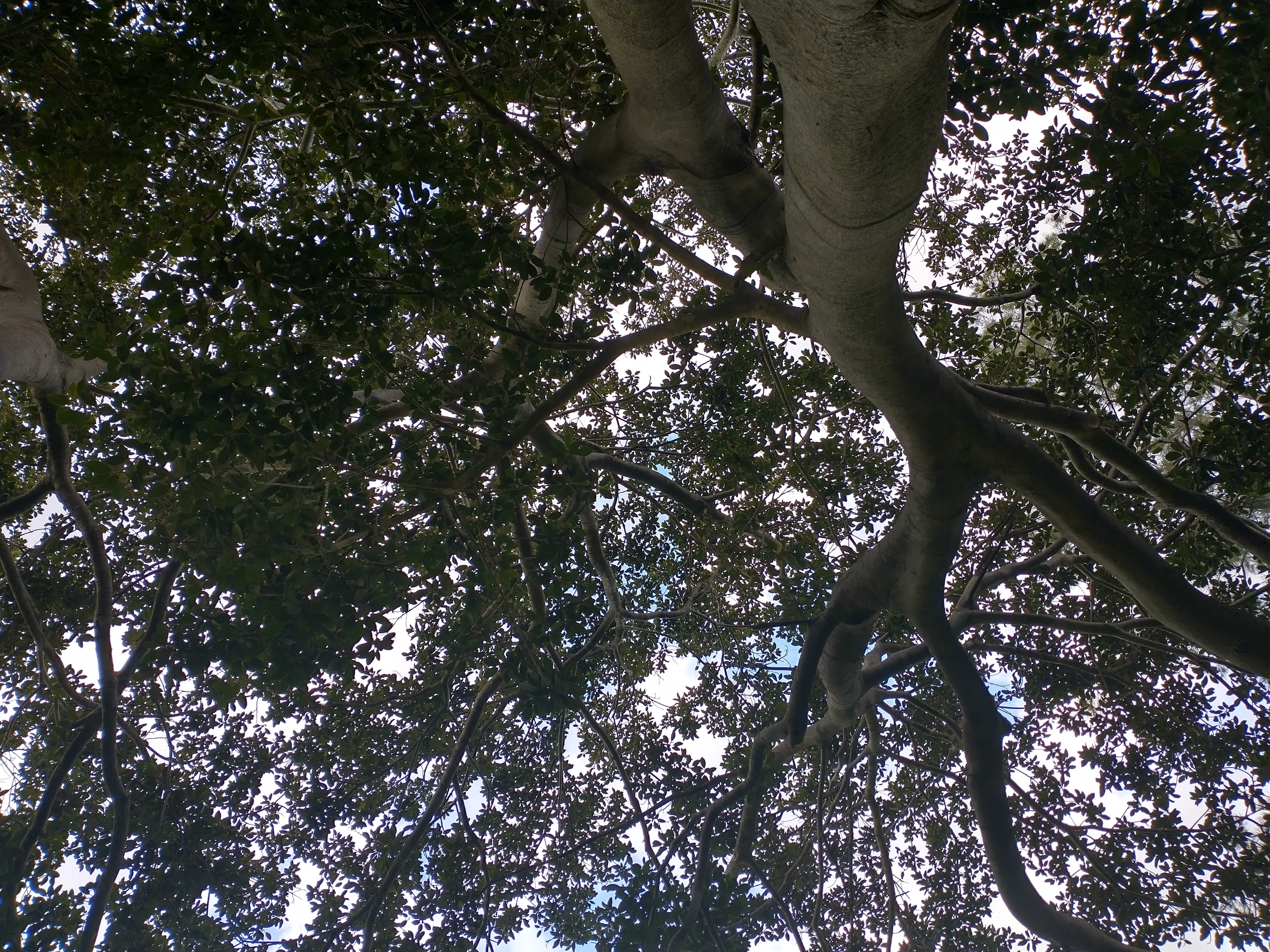
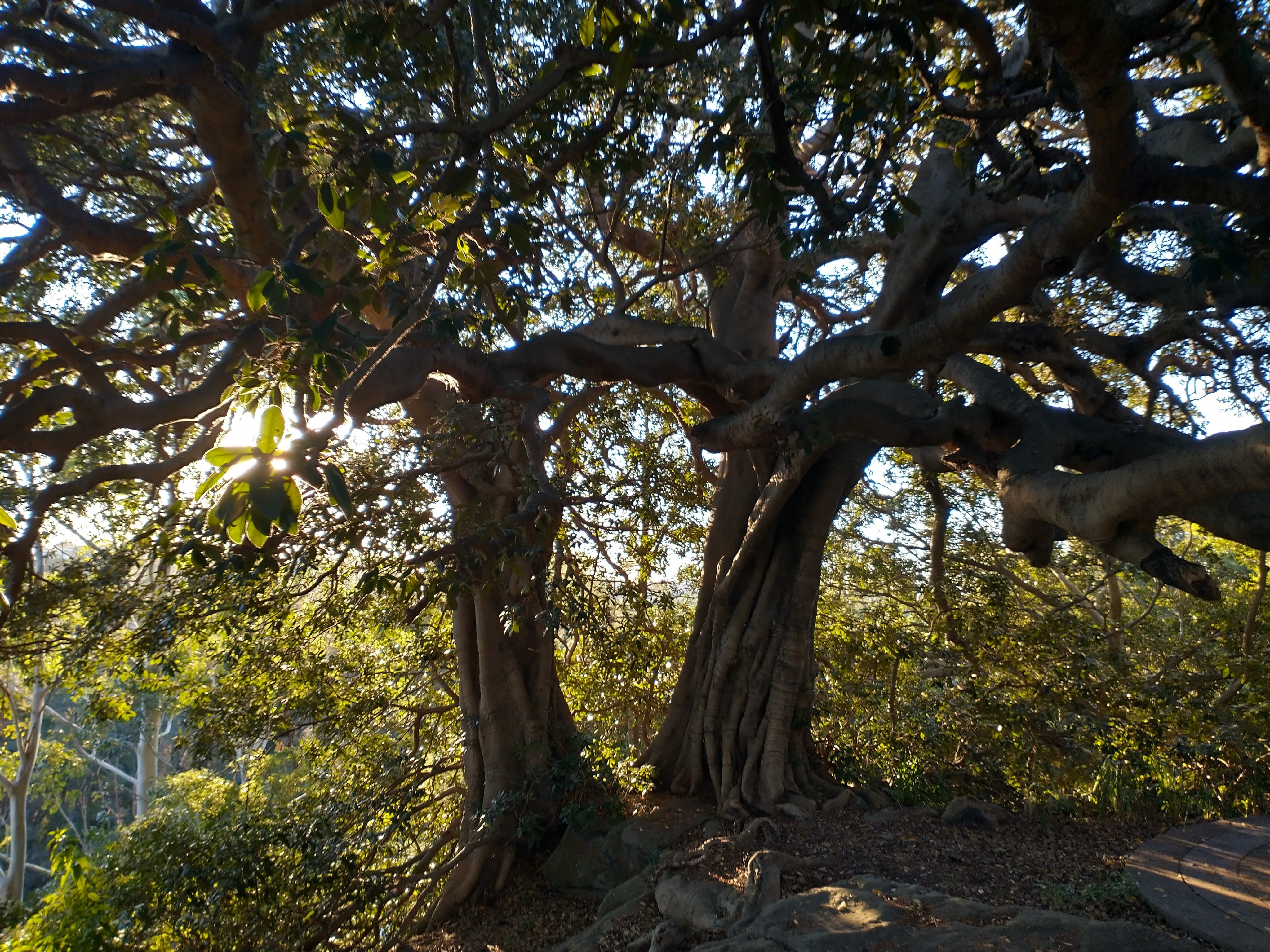
A few times a week I run to the river where I talk to my photosynthetic friend, the Moreton Bay Fig (pictured above). She allows me to sit between her buttress roots, which radiate out towards Cooks River, and in the other direction towards the reserve where she shares her resources with conifers, other fig trees and paperbarks. Neither of us waste time making sound. Instead we enjoy a shared silence that only veteran friendships understand.

It is only through The Silence that the words emerge, where characters coalesce and narrative becomes form. Like others afflicted with biophilia, I draw this silence from nature. Writing is not for the impatient, which is difficult when you live in a world where worth is assigned to productivity. It can take years to write a good book, which is why it irks me when I hear people criticise George R.R. Martin for his delay in writing the last novel in The Game of Thrones series.

To be patient with the process means to have faith in the future. It means that you must have faith in yourself, which is often a herculean feat (and a topic for another blog post). It means that people may shun you as you experiment with plot, as you follow characters who meander past you and travel to the underworld. It means that non writers don’t understand that it can take years to produce something solid, that it takes time for a story to grow and its roots to be sturdy. And it means a level of private despair, because you know that it is a process that cannot be rushed in a world where productivity is worshipped.

But my photosynthetic friend reminds of the rhythms of nature. She also reminds me that not only are humans absurd, we are the only species that willfully persists in destroying itself. Over production of the cells in the body is known as cancer. Over production in aid of over-consumption is clogging our oceans with plastic and overseas landfills that leach toxins from electronic waste into the ground water.

To worship at the altar of productivity for its own sake is not just destructive to our own species. We are at the brink of bringing entire eco-systems down with us.

So join me in raising a glass of chlorophyll (I know essentially it’s plant blood so the metaphor is a tad macabre). But raise your glasses nonetheless, dear writers. Here’s to the rhythms of nature and to the process of silence. Here’s to balance, contemplation and a different way of living.

If you feel the nature vibes check out the following links:

On fiddle writing

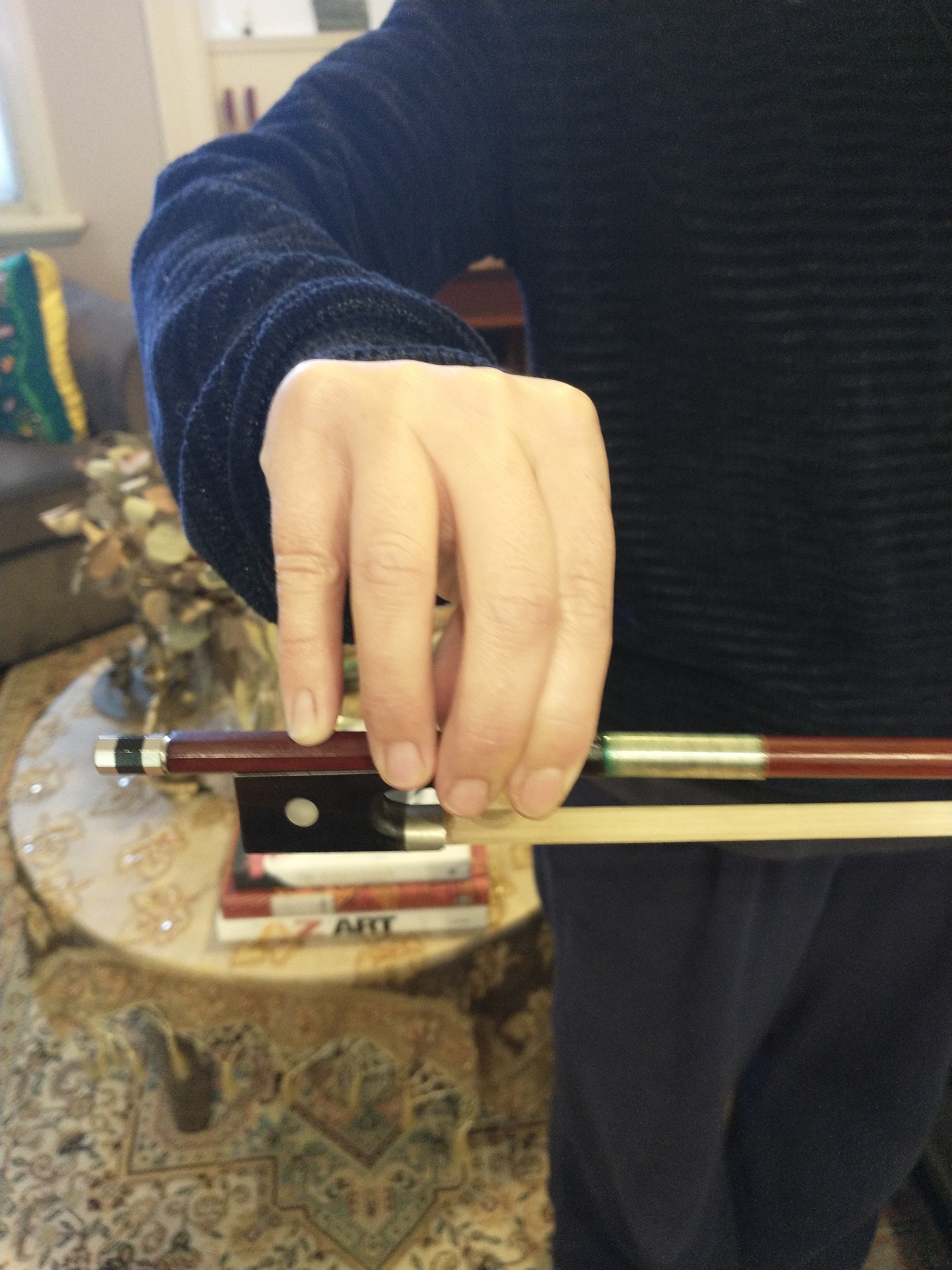
Learning to hold the violin bow

I began writing feverishly at the age of 15 because I couldn’t play an instrument. When I first heard Celtic fiddle music it was as though I heard what it was like to fly-sans jet fuel, and winged metal box soaring at 10 000 feet. I wanted to arrange words that flew, that made me feel as though a simple sentence could defy gravity. Emily Dickinson once stated that the gold standard question she asked about her own writing was “Do these words live?” I suppose that the question that I ask myself is “Do these words fly?” And if they don’t fly do they at least float, or dance a little in a way that could be flying. In a certain slant of light.

Fast forward 20 plus years and I am learning the classical violin. There is nothing like learning an obnoxious instrument during lockdown. The violin isn’t inherently obnoxious, but it is when you don’t stay in the third lane and your bow sounds like nails upon a chalkboard. But hey, my next door neighbour possibly runs a male knock in shop, and I have a tendency to be passive aggressive.

I’m learning the classical techniques because I believe in doing things properly. But I follow a guy called PeakFiddler on You Tube, a self taught Fiddler. The difference between the fiddle and the violin is that the rules go out the window with the fiddle. You can forgo proper posture, bow hold…hell you don’t even need the shoulder rest. As long as you hit the notes, keep the time signature and make sure your violin is in tune, you’re sweet.

I like to think that I’m a fiddle writer. Grammar and syntax in order, I like to play with words so the words become dance and the narrative becomes performance. Really, life is just that, a three to five act play of tragic-comedy. We may as well have a laugh and pretend that we can fly.