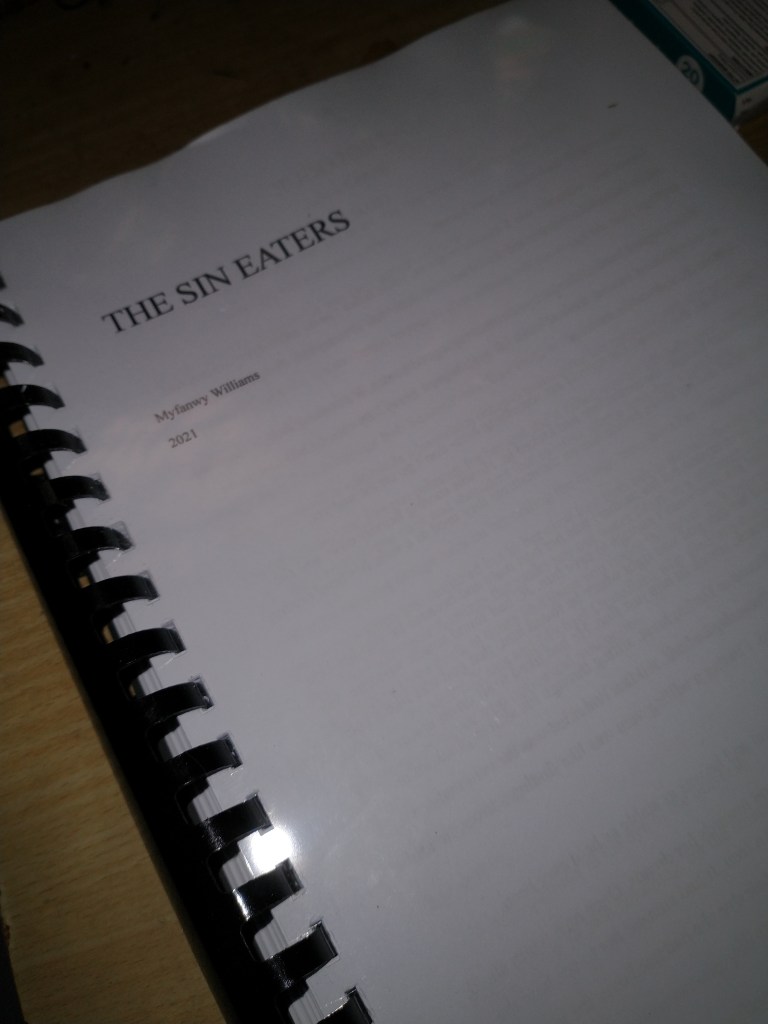
Steal time. A letter to my fellow creatives

To my fellow artists, writers, and creatives, I implore you:

that this is what we must do, so as not to die while our hearts are still pulsing and our breath still escapes our mouths in laboured gasps disguised as whispers,

this is what we must do:

steal time.

Yes, this is a particular type of thievery, but in this world, what other choice do we have?

Steal time from whomever demands your lifeforce at minimum wage, from whomever leaves you feeling more machine than organism, from whomever leaves you trudging rather than dancing.

Steal time because the moment we are born into adulthood, time is stolen from us,

and you can always earn money, shag someone on Tinder, binge-watch that Netflix series. There will always be more groceries to bag, or data to input or reports to write.

Time is the most precious natural commodity there is and if they could, they’d float in on the stock exchange like water, or power or other things that should never be

monetised.

I implore you, this is not merely a moral imperative, it is an act of resistance, to

steal time from your employer, who won’t give you sick pay, won’t give you time off with a dying loved one, who won’t pay you what you’re worth

because it offends their sensibilities, their new religion, their worship of the bottom line.

And this is how you steal time, call it what you like, quiet quitting or just retrieving your humanity from a machine that assigns you a number that’s not a unique datapoint:

write stories in your lunchbreak, compose symphonies in endless meetings, imagine landscapes during the back-to-back shifts you’ve been asked to work,

write on the backs of report templates, on the backs of invoices, on the front of student exam papers, reclaim what it is that makes you human,

resist because the world needs your light,

 more than it needs company men and women, marketing gurus and hedge-fund managers, more than it needs people who only see living beings

as resources to exploit.

Beware enforced merriment

I hate this time of year, particularly the time of year between Christmas and New Year. It seems to be a fallow period, where nobody is expected to do much of anything. Either that, or we’re encouraged to party, lest the incoming year be worse than the last.

I made the mistake of taking time off. A non-writing writer is a recipe for madness. Hopefully, I am beginning to emerge from such madness. Before Christmas, I finished the 3rd draft of my novel. I decided to take a week off to let the novel rest (kind of like letting bread rise overnight), but I found myself cast adrift without a project to anchor me.

So thank goodness it is now the 2nd January and I can walk away from the week of enforced idleness and the pretense of merriment. This week off has made me think about how important creative life is to our souls. I have certainly sacrificed for my art, but in many ways it is not a sacrifice at all.

This morning I found myself spreading half my toast with vegemite and the other half with jam. Don’t try it, it’s not a good combination. But over the past six months I have only been working in paid work for 2 days a week, so of course I am broke. I worked 7 days a week, 5 days writing and 2 days in paid employment. While not having enough money to buy jam, or pay for bus fare, I don’t think I’ve ever been as fulfilled.

Don’t get me wrong, sometimes I would happily return to an age where a wealthy benefactor paid writers good money to compose sycophantic plays or too long poems in their name. It is difficult living in an age (and country) where the arts gets little funding, and the choice is often one between financial comfort and artistic expression. Hopefully, I will find a balance between the two one day.

But I guess my message here is, don’t take time off from your passion/obsession/project/opus/campaign just because people tell you that you should rest over the holidays. Of course, recharge if you desire it, but don’t rest for the sake of resting. If you are a mad obsessive like me, work is rest and rest is work. For mad souls like me, we need our projects in the same way that we need water.

Things that writers do to write better

1. Accuracy and realism

So, I am trying to learn the guitar. Not because I want to learn the guitar that badly, but one of my characters plays the guitar. What does rock n roll sound like in prose?

Honestly, I don’t like playing the guitar, the strings hurt my fingers and I keep trying to hold the guitar neck like a violin fingerboard. The frets are meant to make things easier, but it makes the fingerboard look like a complicated chessboard.

I prefer the violin, which I’ve been learning for 4 months. None of my characters play the violin. Maybe they should?

My neck hurts.

2. Read widely.

Virginia Woolf said that if you read a book a day, the words will flow out of you. I’m juggling four novels for inspiration.

A publisher told me that I should also read genre fiction to learn how to keep the plot moving.

I’m reading Dickens’ Little Dorritt, Grenville’s The Secret River, Whitehead’s Harlem Shuffle and Steven King’s The Institute.

The words are flowing from me all right.

So now I have a child with telekinetic abilities, living in 19th century colonial Australia speaking Harlem slang. None of my sentences are shorter than 8 lines and I have too many semi-colons.

Nobody wants to read that shit.

My head hurts.

3. Focus.

I need to finish this draft soon. I also have a day job and I need to get another day job that pays for my cats, and for more books. And for a new bookshelf to store the new books.

But there’s Netflix, Stan, Disney Plus, ABC iview, SBS On Demand… We live in a golden age of streamed television.

Plus, there’s the baby beanie for my friend’s son. My friend has been waiting on it for eight years. I really should finish it soon.

I really am learning the violin. There’s so many ways to sound crap on the violin. I should practice.

Everything hurts.

On friends and creative symbiosis

So I have finally finished a full draft of my second novel. This has been a ten year process, and the concept has evolved quite a lot since its inception. Also, a lot has happened over the ten years, and as I have matured, so has my writing.

Writing, more than other creative pursuits, tends to be a solitary endeavour. It is more common for visual artists and musicians to collaborate as a matter of practice, than it is for writers. This sort of isolation for writers is both blessing and curse. We need to be alone with our thoughts, and venture out only to eavesdrop on the world to gather more material.

Writers are like rag and bone men, but we collect our detritus in the form of ideas, observation of our fellow human mammals and conversations overheard in public. Alone we sift through the rubble of stolen and recycled thought. Alone when I am writing, I like to pretend that I sit with the ghosts of Toni Morrison, Dickens and Steinbeck (a weird combination, but it works for me). This solitary part of the process is essential.

But it is not the whole process. I wish that it were. Factor in crippling self-doubt, self-loathing and shame. Add in the nasty gnomish voices in your head which form a chorus to eviscerate everything you write. Sometimes I wonder how many half written novels, memoirs or books of any genre there are in the world.

I wouldn’t have been able to get this current manuscript to this stage, were it not for a group of friends encouraging me along the way. In my experience, creative support is essential to the writing process, in order to move through the crippling self doubt. A word of caution- it is important to choose people who support you in your vision, even if they do not understand it.

I still have more steps to undertake before this becomes a reader’s draft. But I wanted to share this on my blog. This time last year, I didn’t think I’d ever get here. So here’s to friendship and creative symbiosis! I would like to share an amazing TED Talk. For anyone wanting to achieve any goal, creative or otherwise, this is a must watch: https://www.youtube.com/watch?v=H2rG4Dg6xyI

What I wanted to do but never did

Today I spoke to a dear friend about some of her recent journal writing. She was inspired by a person who had written a letter to a well known poet. The poet died in Covid quarantine before the letter was received.

We discussed the inevitable and often sad moments when we stop to take stock of our lives, and the choices we have made. There comes a time of reflection, where we think about missed opportunities or different paths that we could have taken. I have always lived by the popular adage “we regret the things we don’t do.” And I have pushed through fear and depression to achieve a number of items on my personal bucket list. I am also blessed to live in a country where I don’t have to worry about day to day survival and I can think about a bucket list. So I have no regrets when it comes to travel, education or creative projects.

But I have many regrets, often tinged with a suffocating guilt that wakes me in the middle of the night. Let me explain.

Life desires equilibrium, which can sometimes be mislabeled as irony. I have the capacity to write tomes detailing with great complexity and frequent indulgence, the feelings of my characters. I try to capture motivation, regret, desire and the subtleties of human interaction. To counteract this, my nature is one where I appear reserved, detached and unemotional.

I have no contact with my family, and without divulging too much to the online world, this lack of contact extends beyond those with whom I have a legitimate grievance. I do not speak to cousins, my brother, aunts and uncles-not because they have hurt me, but because the realm of human connection is overwhelming. This is not because I don’t care, and it is my concern for them that keeps me awake in the middle of the night.

It’s an odd thing to notice about myself. I have no problems pursuing non-relational desires. And perhaps it is because there is certainty with bucket list goals. You either travel to Europe or you don’t. You pursue a creative project and it works, or it doesn’t work, or you revise it.

But reaching out to others, there is uncertainty to this. Humans are unpredictable. We say what we don’t mean and we mean what we don’t say. We let anger and resentment shield love and loss. And unlike a novel, a story or a film, sometimes there is no resolution to the plot complication. Sometimes there is no character arc, as some people may choose to never grow. The innate satisfaction, the dopamine hit, that accompanies a sense of completion never arrives.

Perhaps this is why we need stories, why we need art and music, because it is capable of providing us with the closure we may never receive from those we love.

Go all the way

If you’re going to try, go all the way. Otherwise don’t even start. This could mean losing girlfriends, wives, relatives and maybe even your mind. It could mean not eating for three or four days. It could mean freezing on a park bench. It could mean jail. It could mean derision. It could mean mockery-isolation.

Isolation is the gift. All the others are a test of your endurance, of how much you really want to do it. And you’ll do it, despite rejection and the worst odds.

And it will be better than anything you can imagine.

If you’re going to try, go all the way. There is no other feeling like that. You will be alone with the gods and the nights will flame with fire. You will ride life straight to perfect laughter.

It’s the only good fight there is.

Charles Bukowski

I haven’t felt the tips of my left hand fingers for two months, my neck hurts and the RSI in my right wrist is waving a familiar hello. Apparently this litany of complaints is normal for people learning the violin. A musician friend yesterday told me that learning the violin is like playing 4D chess. While I don’t think it’s that hard, it’s certainly not easy learning an instrument for the first time in your 30’s. And it is frustrating when even your cats run away from your violin practice.

Despite my complaints, realising that I have chosen to learn a bloody difficult instruments isn’t enough to make me quit. Why? Because the violin (played expertly) is a beautiful instrument, with a sound that is both haunting and transcendent.

And this leads me to thinking about the price we must pay when we decide we want to enter life fully, whether that be in a traditional artistic sense or simply living authentically.

Living fully always incurs a fee. Sometimes that fee is rather steep. We need only look at ancient mythology to learn the price that must be paid to gain wisdom and favour from the gods. In Norse mythology, Odin sacrificed his eye and hung himself from the Tree of Life for nine days to gain all the wisdom in the world. In shamanic traditions, initiates must abstain from food and water for a number of days in order to gain clarity and vision. Sacrifice and solace are two sides of the same coin.

It as though we have to show that we are determined and committed. We must, as some writers have said, sit in front of a blank sheet of paper and bleed. We must be willing to have our work rejected and rejected and rejected again, and still stand resilient. And sometimes it is about pushing through the nasty voice in your head that tells you that no matter what you do, you will never be good enough. Or the voice that tells you that you’re a fraud.

And it is a hard, uphill battle.

In a world of instant gratification, in a world where patience is no longer virtuous, I don’t think we fear battles, exactly. We fear the prolonged nature of the battle. And we have lost faith in the process of slow art. Years ago I visited St Mark’s Cathedral in Venice, and I remember reading a sign that explained the hundreds of years it took to build the cathedral. Art takes time, and this both exhilarates and terrifies me.

One of my biggest fears as a writer is that ideas will stop coming and that I will die with half written manuscripts lying around. I hate the crisis of faith I feel when I am overwhelmed by intersecting narratives and characters who stop talking to me. I hate the fear that comes from writer’s block and that damn voice in my head that says I should be doing something else with my time.

But I have to remember that all these feelings comprise the price that must be paid. As Charles Bukowski says, “it is the only good fight there is.”

Totalitarianism and the murder of creativity

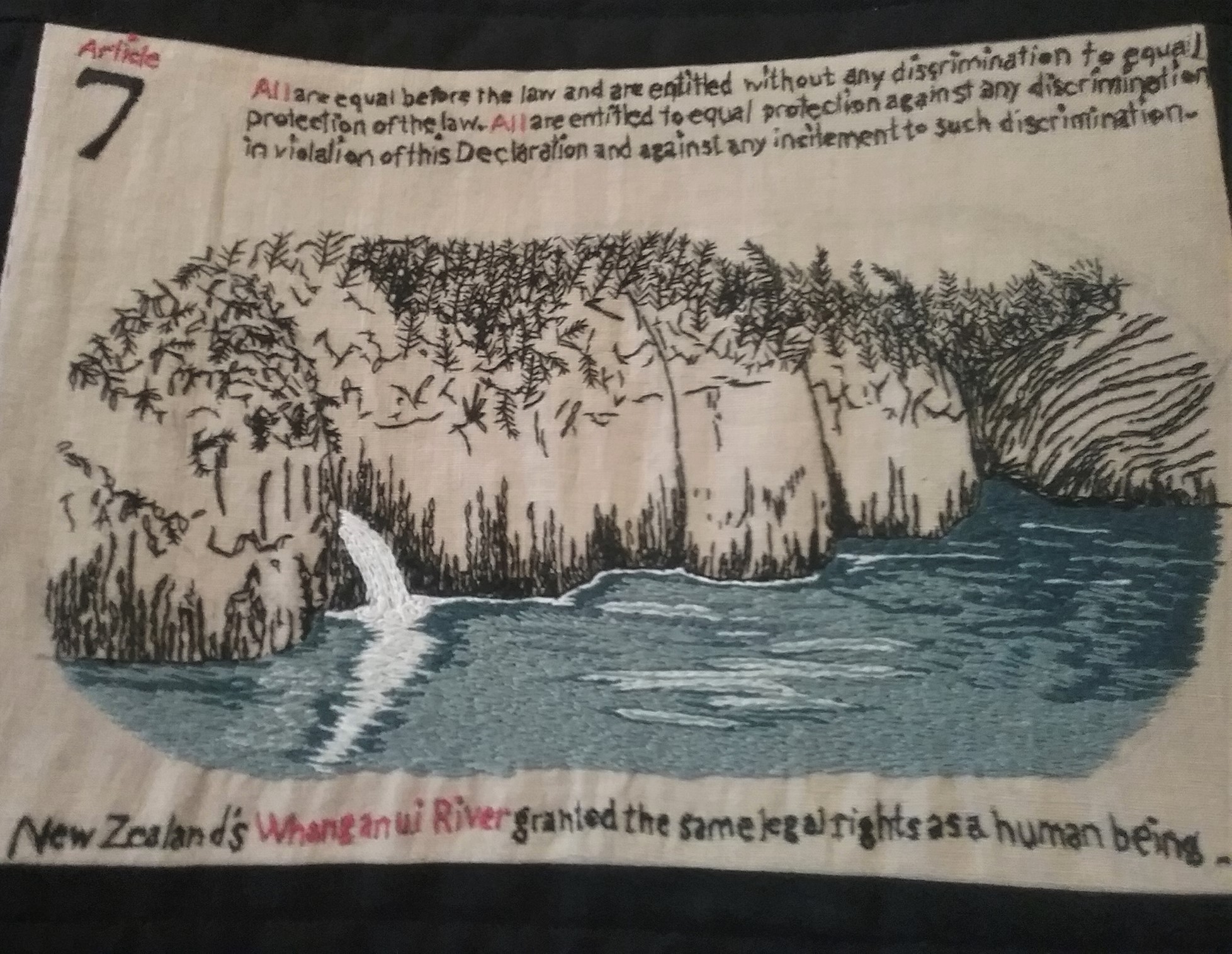
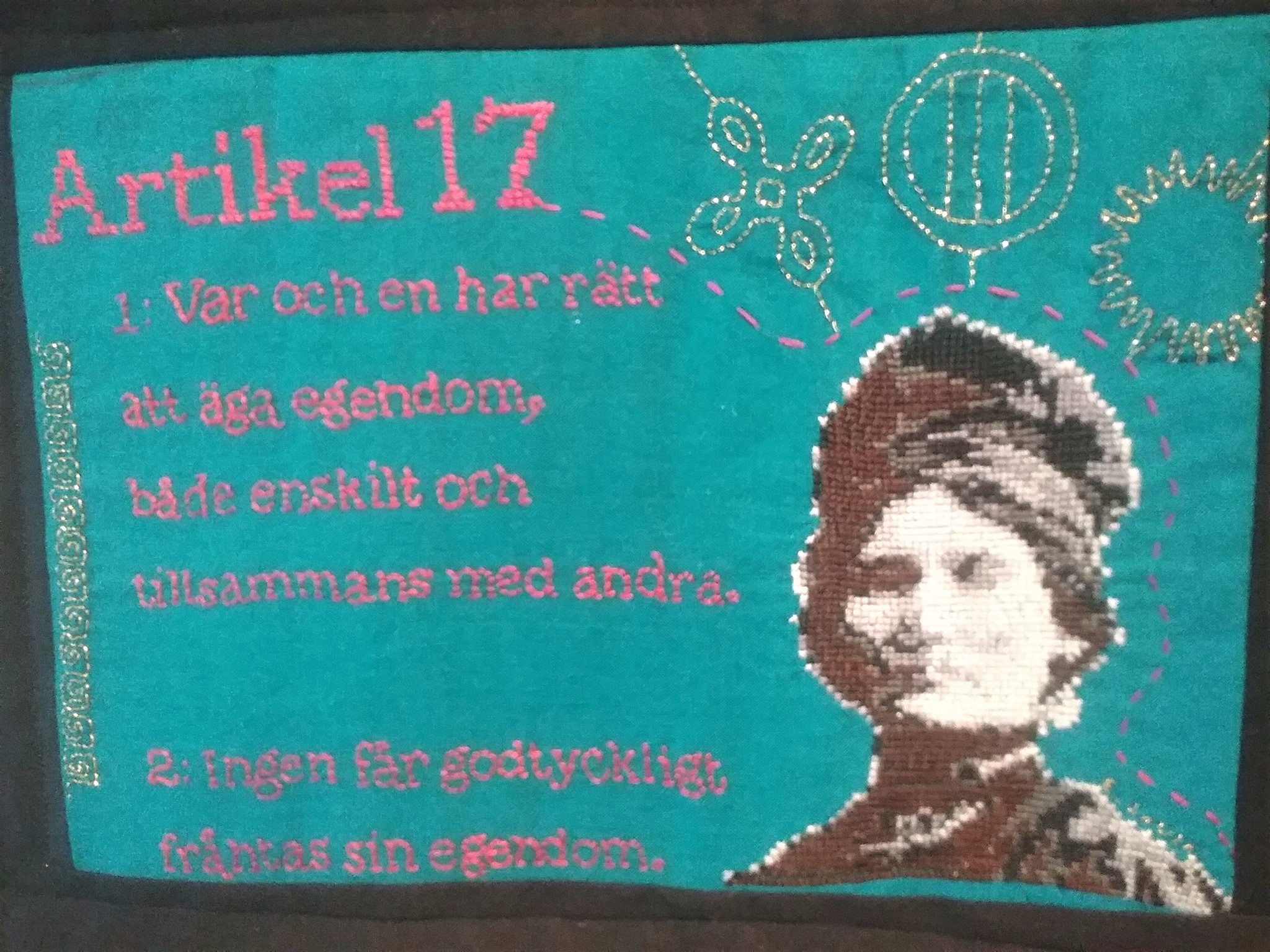
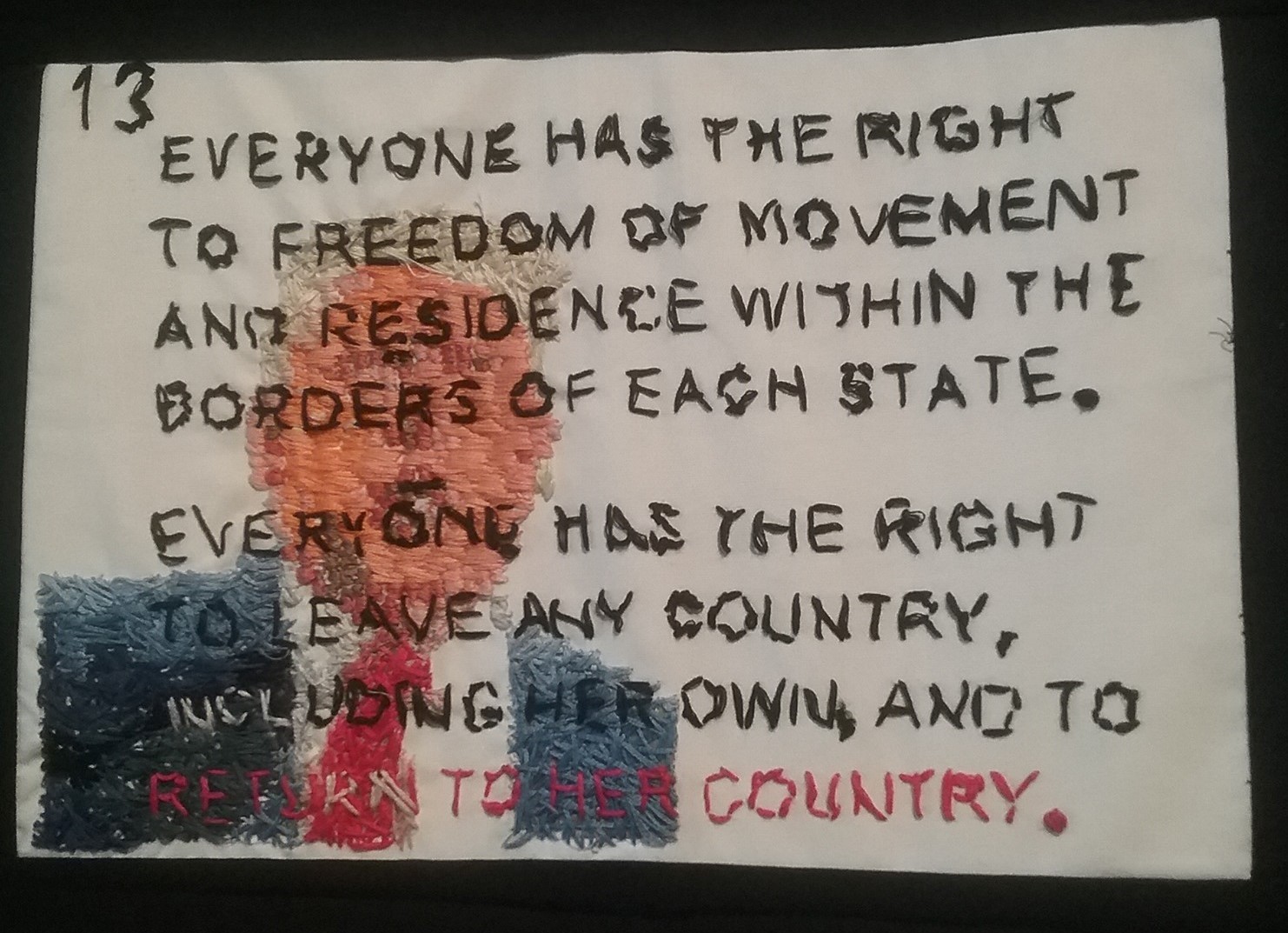
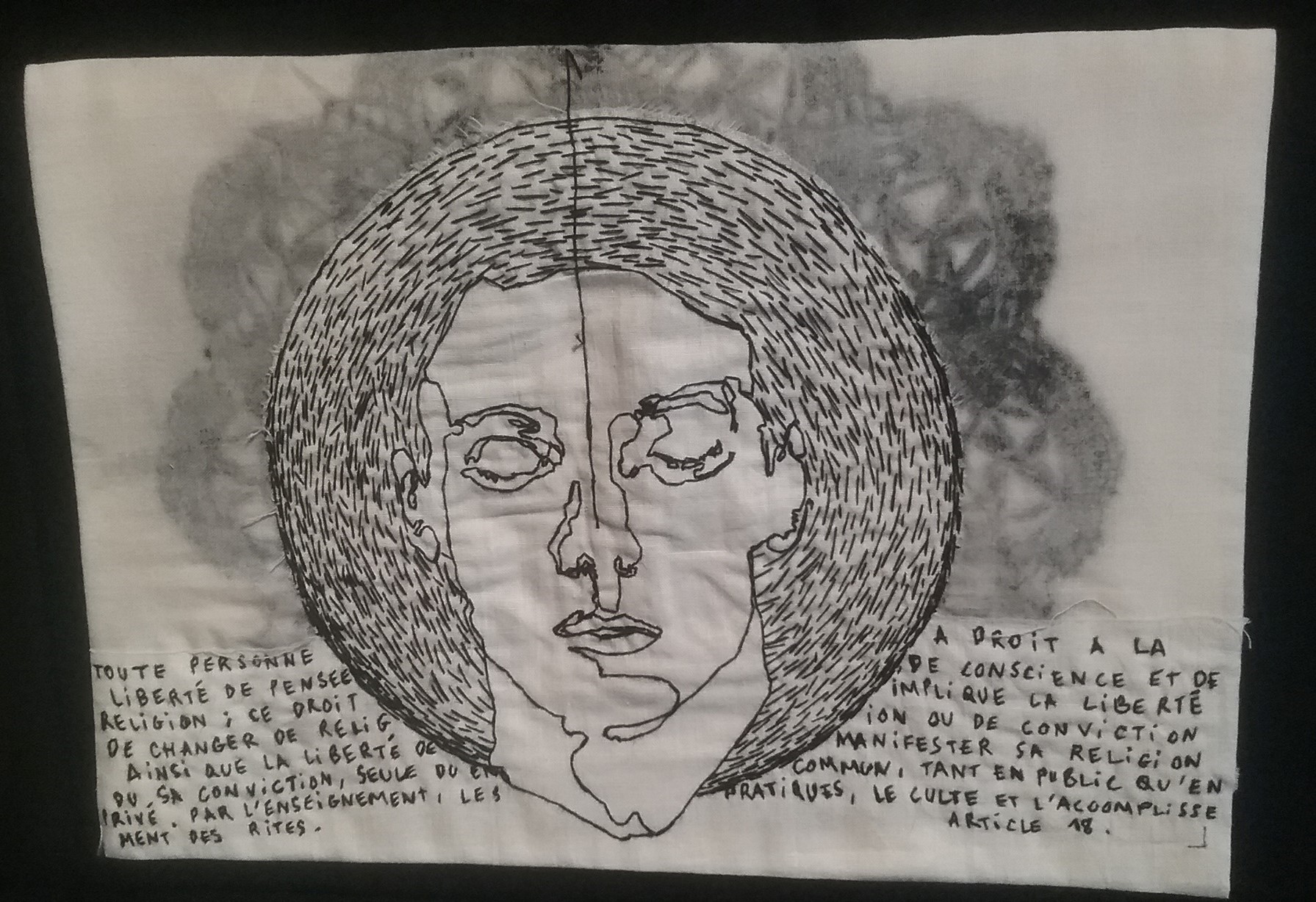
Textile Exhibition of the UN Declaration of Human Rights, Old Parliament House Canberra, December 2019.

I do not pretend to understand the complexity of geo-political relations in Afghanistan. What I do know is that Afghanistan has been at the centre of a geo-political chess board for decades, stemming back to the cold war. I know that my government is not doing enough, with its draconian stance on refugees and its willingness to leave people who helped the Australian Defence Force to their fates.

And what I know comes from a space of heart rather than logic. I have taught Afghani refugees, most of whom were from the persecuted Hazara minority. I have heard stories of lives that I couldn’t even begin to imagine. And in the comfort of my safe Australian home, I have read news reports and books written by women who fear for their future.

From the perspective of someone who has found solace in creativity, reports of the the suppression of creative life under the Taliban are chilling. Under the Taliban between 1996 and 2001, all music, art and film that did not adhere to strict religious dictates were banned. We are not just talking about so called ‘imperialist art’, the likes of which were banned during China’s cultural revolution. This was not just garden variety censorship. Historical sculptures were destroyed. Folk music and singing that existed for centuries were banned.

The Taliban is not the first regime that has attempted to suppress creative expression. Dancing was and probably still is prohibited in some Puritanical Christian sects. In Australia, we banned Indigenous music, dance and ritual in our 19th century and early 20th century missions. Historical documents show that dance and music were banned on some slave plantations in America.

There is something sinister about the banning of folk art. Most folk music is benign and ostensibly not a threat to the political structure. The trope is predictable and almost universal. There are the love stories, the hero stories, the soldier stories, the working in the field stories. This form of creativity is what unites communities, providing comfort, stability and a sense of identity. Perhaps this is why totalitarian regimes seek to destroy all creative expression, from the overtly polemic to the benign lullaby one sings with a traditional instrument.

When a person is deprived of creative thought and expression, they may become malleable and hollow. The best way to oppress a people is to kill their spirit, so they become fearful automatons. One of the things that separates human mammals from non human mammals is creative expression. In the totalitarian playbook, the creatives are always the first to be executed, along with the political dissidents. In advanced totalitarianism, all creativity is quashed.

But it is not possible to oppress people forever. Humans find a way. In Pinochet’s Chile, all correspondence out of the country was intercepted, so the international community would not hear of the horrors occurring. But I have heard that women began embroidering their stories on cloth, and sending their needlepoint to their relatives overseas. In their arrogance, the regime believed that embroidery was simply something women did to pass the time, and did not stop to look at the embroidered pieces.

Closer to home, Kurdish journalist Behrouz Boochani wrote his biography ‘No Friends But The Mountains,’ on a smuggled mobile phone while indefinitely detained for seeking asylum by the Australian government.

Creative dissent cannot be completely quashed, and these examples provides a sliver of solace in the darkness.

Graffiti art from the Melbourne CBD, March 2020

Artistic inspiration during lockdown?

“The cause of plagues is sin, and the cause of sin is plays.”

A preacher in Elizabeth England, possibly in response to Shakespeare’s plays.

Bloody brilliant, I say. The highest praise you can give a writer is to tell them that their writing caused the latest plague. Don’t tell the conspiracy theorists though…that is a whole other labyrinth of madness.

One of my friends texted me last week and asked me if she had properly signed up to this blog. She wasn’t getting any blog notifications, she said. I had to inform her that it was because I wasn’t writing content that was in a shareable state. And it is true that there is always a writer’s draft and then there is a reader’s draft.

But I haven’t been writing publicly because the content of my journals would read like a Live Journal circa 2003 and I really don’t want to drag others down into my personal mire of malaise. Despair is probably a more accurate word.

One of the myths around creative practice is that creative types ‘need’ depression to activate the creative juices. I call B.S. There is a relationship between the extremes of emotion and creativity, but I think the causation is reversed. Creative life helps us with despair, and not the other way around.

Another friend told me that her daughter, also a writer, is struggling with inspiration at the moment. Inspiration often comes from observing life around you, by sitting in a coffee shop and listening, for example. Inspiration comes from immersing yourself in the ebb and flow of life. At the moment, life is certainly not flowing for us in Australia.

Lockdown is a unique crisis in that we are forced to experience it in isolation. One of my Melbourne friends, when I asked her how she has coped with a prolonged lockdown, said “Look, I tell myself that all the government wants me to do is stay at home. I can do that. It’s not like they want me to fight a war in Europe or anything.” I also have friends who’ve lost generations of family members in South America. Compared to such loss, staying at home seems like a simple ask.

But as human mammals, primed for interaction, lockdown has severe implications for those of us living on our own. The chattering mind is a dangerous place to be lost in. And for a writer, stream of conscious writing died with the Modernists. So what is the answer when we are starved of inspiration?

Seek comfort rather than inspiration, is my answer. If it means reading fantasy or improbable crime fiction, than so be it. If it means taking photos of flowers on your android with an Instagram filter and calling it ‘high art’, then so be it.

And maybe there’s a case for accepting bleakness and writing through the bleak. Apparently, Shakespeare wrote King Lear during the bubonic plague, and if I’m honest, who doesn’t love a tragedy with a bit of eye gouging? 300 years prior Boccaccio wrote The Decameron during the black plague in Italy. In full disclosure, I am still on page 3 of the book, but I’ve been told that out of bleak can come the bawdy and the tragi-comic.

Because really, if you follow the bleakness through to its logical conclusion, we encounter a bit of lightness, a glimmer of hope and a large slathering of absurdity.

Movement and the fear of scratchy.

Yesterday, I fastened my face-mask, laced up my old pair of sneakers, picked up my violin and walked to the river. I’d had a case of the stabbies* for the past few days and I just needed to make noise. Since we’re all in an indefinite lockdown, and my neighbours don’t deserve to hear a novice violin player at 10am on a Monday , I thought I would find a river tree and practice bowing on some open strings.

Two weeks ago I told my violin teacher that I was very motivated to not sound scratchy. She told me that the awful sound akin to a dying cat is caused by a number of things. One of the causes is hesitation. If one moves the bow too slowly over the strings, or if one hesitates, the violin transforms from an instrument of elevation to an instrument of sadism. Ok, an exaggeration, but I am very motivated to not sound scratchy.

It was probably not the best idea to stand beneath a eucalyptus tree where three adolescent magpies (as hostile as human adolescents, but with less Tiktok and more beak) glared at me. Do magpies dive bomb violins? They can certainly poop on violins. Thankfully, I emerged from my practice session unmolested by magpies and any of their winged dinosaur counterparts, but my session got me thinking about movement.

It is only through movement that we find our balance and our momentum. The principle is the same for riding a bicycle. As a perfectionist, I have always been afraid of starting anything, lest I fail. And then when I do start, I am afraid of sharing my work lest I be judged.

Learning the violin is a teacher in more ways than one. Usually I show people the final products of my writing and art. I have drawers filled with half finished craft projects that I abandoned because they weren’t good enough. A shout out to Bec who is still waiting for a baby beanie for her newborn son (I think he is around 8 years old now). I have abandoned writing on scores of USBs. The thing with the violin is that you can’t hide practice. You can’t emerge from a cocoon with amazing pieces of work. People hear you in all your scratchy awfulness. They witness the process and the effort.

Perfection is the master killer. Hesitation is usually an accessory to this crime. At the heart of hesitation is good old fear. Every artist and writer I have met has struggled with fear. We want to wait until our work is good enough, until the balance of probabilities shows us that we will not be rejected. To live in a space of hesitation is a horrible feeling. As a recovering Catholic I was raised to believe that purgatory was real and I imagine that hesitation is a sort of Catholic purgatory (with fewer unbaptised babies).

Worse, we wait for inspiration to get us moving. But inspiration comes from swan diving into movement. It comes from immersing yourself into the mire of life, from reading everything you can get your hands on and throwing yourself into every experience that might move you. It comes from experimentation, bad art and bad poetry.

The irony is that when I lose my fear of being scratchy, and use the length of the bow, I actually hit those notes. Ok, enough tortured violin metaphors, you get the idea.

So this week, I encourage all you fellow creatives to just keep moving. If you must be scratchy, be scratchy. Move fast and fearless, make noise and commit crimes against metaphors. Take blurred photos, draw out of proportion, tear up the rule of thirds and cultivate clichés.

Just keep movin’.

*Stabby: (noun and adjective) an overwhelming feeling of rage, in which , given the right circumstances, you could stab every person you met. (noun)- She had a case of the stabbies. (adjective): The stabby woman broke a violin over her neighbour’s head.

On worth and being

Beyond a wholesome discipline, be gentle with yourself. You are a child of the universe no less than the trees and the stars; you have a right to be here.

Desiderata by Max Erhmann (1927)

For as long as I can remember, I’ve been plagued by feelings of deep inadequacy and shame. To quote the 90’s singer Sarah McLoughlin, “You can always find reasons to not feel good enough.”

I’m pretty sure that I’m not alone. We live in a capitalist society where competition and winning are paramount. We’re taught to measure ourselves against endless yardsticks ranging from physical appearance to sporting prowess to academic success to wealth accumulation. We’re taught to see ourselves as ‘better than’ and to strive to be ‘more than.’

Researcher Dr Brene Brown has written extensively on the subject of shame and worth, and I recommend her books for a more psychological analysis of the subject. But really, what does it mean to feel worthless? It is a feeling of toxic shame inside, a feeling that inside you are not enough, and that you must not, under any circumstances, allow the world to see your unworthiness.  So, we wear masks of bravado, we waste our lives trying to reach milestones that tell the world we are enough. And we do this so one day, we can convince ourselves that we are enough.

After years of striving to show the world that I was enough, I spoke to a dear friend about these feelings. She responded by sending me the poem Desiderata (excerpt above). Something inside me began to shift.

I have a theory that if we were taught deep ecology in school, our consciousness would change. Deep ecology contends that each organism plays a role in the collective. Remove an organism and the ecosystem is thrown out of balance. Every being has an impact, and every being is valuable to the ecosystem. Just look at the humble bee and consider what would happen if the world’s bee populations disappeared.

Now consider something more optimistic. Imagine what the world would be like if we all believed we were innately worthy. Not better than, but not less than either. How would we spend our time? What choices would we make? Would we need to engage in conflict to prove that we were the strongest, the mightiest and the most capable of destroying the world ten times over?

My current novel (still being written) explores our struggle with worth, amongst other equally light topics. It explores the harm we do to ourselves, our children, and everyone we touch, when we feel unworthy. Writing this novel is no easy feat. I still struggle with a deep sense of unworthiness, but I am conscious of it now. Sometimes I simply need to pause my writing and spend time in the garden.

There is wisdom in nature that our human minds are only beginning to comprehend.